

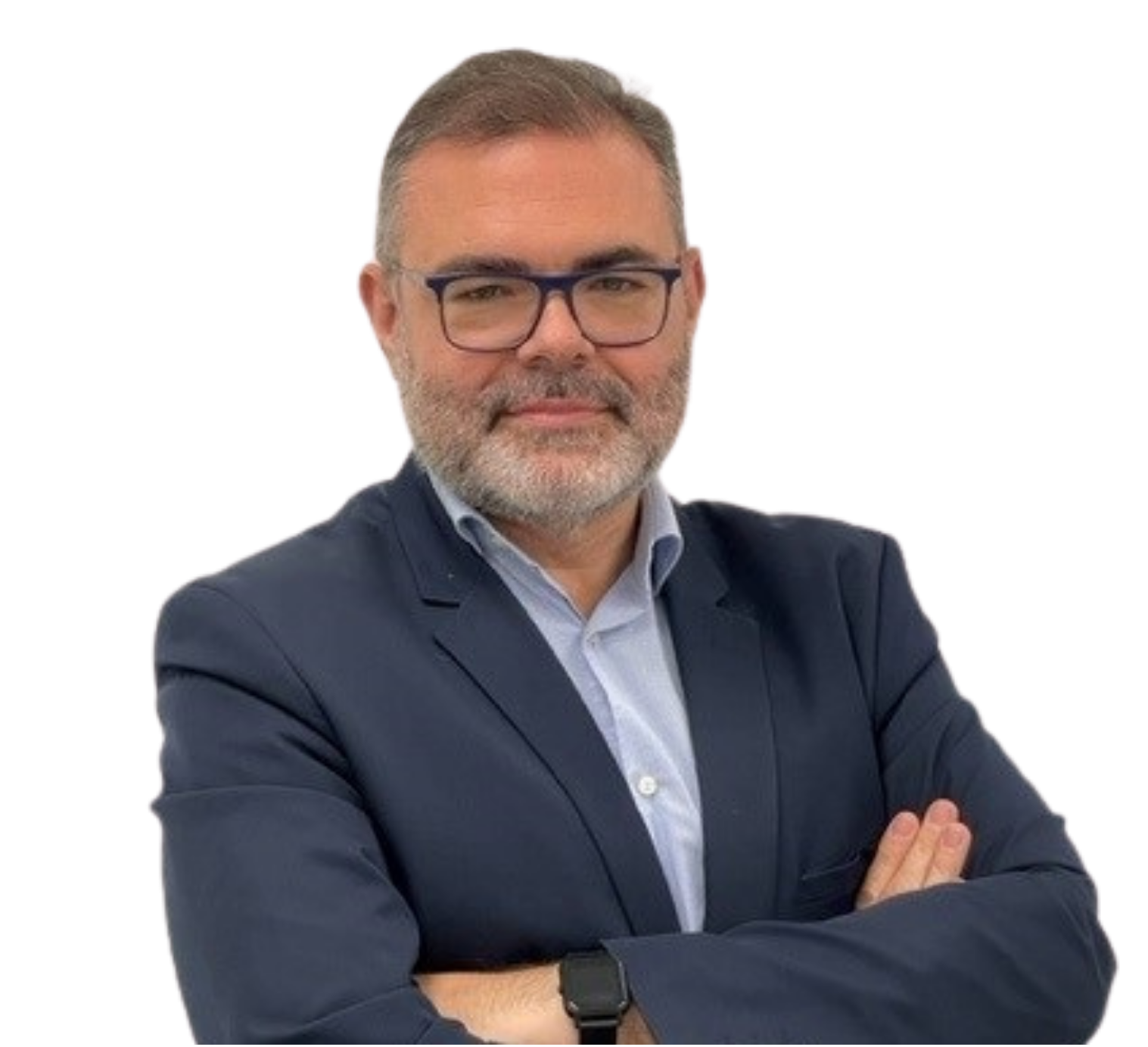
Óscar Salazar es Managing Director en la unidad de Fondos Europeos en Euro-Funding, donde lidera un equipo multidisciplinar de más de 30 profesionales internacionales, incluido el equipo de la oficina de Bruselas. Con casi tres décadas de trayectoria profesional, ha desarrollado una sólida carrera en la gestión de fondos europeos, la coordinación de proyectos de I+D+i y la evaluación externa de programas internacionales de innovación. Antes de su actual responsabilidad, desempeñó roles como Technical Manager y Senior Project Manager en Euro-Funding, además de haber trabajado como gestor de proyectos en organismos como el Ministerio de Ciencia e Innovación, el CSIC, y como evaluador externo en iniciativas europeas de financiación. Asimismo Óscar aporta una sólida experiencia en investigación básica y desarrollo en compañías de referencia en biotecnología, desarrollo de fármacos, y diagnóstico molecular como MSD, Genómica-Pharmamar y Biotools, Su formación académica integra un Executive MBA por EAE Business School y la Universidad de Barcelona, un posgrado en European Research Management por la Universidad Politécnica de Madrid, un doctorado y máster en Biología Molecular y Bioquímica por la Universidad Autónoma de Madrid, donde también obtuvo su licenciatura. Este recorrido le ha permitido consolidar un perfil que combina la excelencia científica con la visión estratégica en financiación y gestión de proyectos europeos, contribuyendo al crecimiento y posicionamiento internacional de empresas, universidades y centros de investigación.

Coordinating EU collaborative projects
Coordinating EU collaborative projects: when execution marks the difference Lucía Duque Teva( Project Manager European Funds )Settings Coordinating a European collaborative project goes far beyond convening meetings or collecting deliverables….

EU Added Value in LIFE Proposals
EU Added Value in LIFE Proposals Fernando Gómez( Technical Manager – European Funds )Fernando Gómez es Technical Manager – EU Projects en Euro-Funding desde 2020, con experiencia coordinando propuestas europeas…

The vision of the EAIC on the future European budget
The vision of the EAIC on the future European budget Marie Latour( European Affairs Director )Actualmente, como Director de Asuntos Europeos en Euro-Funding, cuento con más de 14 años de…